Welcome! Check out today's deaths, recent deaths, or our deaths stats.
Feeling experimental? Head on over to our newest (and darkest) feature: Next-2-Die™ predictions
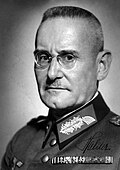
 Franz von Papen

German general staff officer, politician, diplomat, nobleman and chancellor of germany (1879–1969).
Born October 29th, 1879 in Werl.
Died May 2nd, 1969 at 89 years old in Sasbach.
Franz von Papen, born on 29 October 1879, passed away on 2 May 1969 at the age of 89. He was a prominent German diplomat, military officer, and politician, whose career spanned several significant periods in 20th-century German history. Von Papen began his career in the Imperial German Army during World War I, eventually rising to the rank of colonel. After the war, he transitioned into politics, becoming a member of the Centre Party and later serving as the Chancellor of Germany from June to December 1932. His brief tenure was marked by political instability, a period characterized by the growing power of the National Socialist German Workers' Party (Nazi Party). After losing the chancellorship, von Papen played a key role in facilitating Adolf Hitler's rise to power. He served as Vice Chancellor in Hitler's government from 1933 to 1934 and was instrumental in the political maneuvers that led to the consolidation of the Nazi regime. His influence diminished following the Night of the Long Knives in 1934, after which he was removed from political power. Following his departure from active politics, von Papen served as Germany's ambassador to Turkey from 1939 to 1944, where he represented German interests during World War II. He remained in Turkey until the end of the war, after which he was detained by Allied forces but ultimately released without charges. After the war, von Papen lived in Germany, where he largely withdrew from public life. He published his memoirs in 1952, providing insights into his experiences and perspectives during a pivotal time in history. Throughout his life, von Papen was a figure of considerable controversy, reflecting the complexities of political maneuvering in Germany during the early to mid-20th century. His legacy continues to be the subject of scholarly debate regarding his role in the events that shaped modern Germany.
You might also be interested in...


The fear of death follows from the fear of life. A man who lives fully is prepared to die at any time. Mark Twain