 Jürgen Habermas

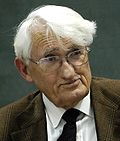
German sociologist and philosopher (1929-2026).
Born June 18th, 1929 in Düsseldorf.
Died March 14th, 2026 at 96 years old in Starnberg. [ref]

Jürgen Habermas, a renowned German philosopher and sociologist, passed away peacefully at the age of 96 on March 14, 2026. Born on June 18, 1929, in Düsseldorf, Germany, Habermas dedicated his life to studying the complexities of society and the role of communication in shaping it. Habermas' academic journey began at the University of Bonn where he studied philosophy and economics before turning his focus towards sociology. He then went on to obtain his doctorate from the University of Bonn and later became a professor of philosophy at the University of Frankfurt. During his time as a teacher, Habermas also held the position of Director of the Max Planck Institute for the Study of Societies. Throughout his illustrious career, Habermas made significant contributions to the fields of philosophy and sociology. He is best known for his theory of communicative action, which explored the role of language and communication in shaping society. His work on the public sphere, which examined the relationship between the state and civil society, also had a profound impact on sociological theory. Habermas' influence extended far beyond the academic world. His ideas and writings were widely read and discussed by policymakers, activists, and intellectuals around the world. He was also a strong advocate for democracy and played a significant role in shaping political discourse in Germany. Despite his age, Habermas remained an active scholar until the very end. The news of his passing has left a void in the academic world, and his legacy will continue to inspire future generations of thinkers. Jürgen Habermas will be remembered as one of the greatest philosophers and sociologists of our time. His contributions to our understanding of society and democracy will continue to shape academic discourse for years to come. He leaves behind a rich body of work and a lasting impact on the world.
The harder the pain, the longer the path to recovery, the better the opportunity to learn. Maxime Lagacé